Ausbildung
Vocational Ausbildung Courses in Germany: How They Work
A vocational Ausbildung course in Germany is not a university degree and not an unpaid internship. It is a paid, structured training in a real profession, run jointly by a company and a vocational school, that ends with a nationally recognised qualification. Here is how these courses actually work, start to finish.
What a vocational Ausbildung course is
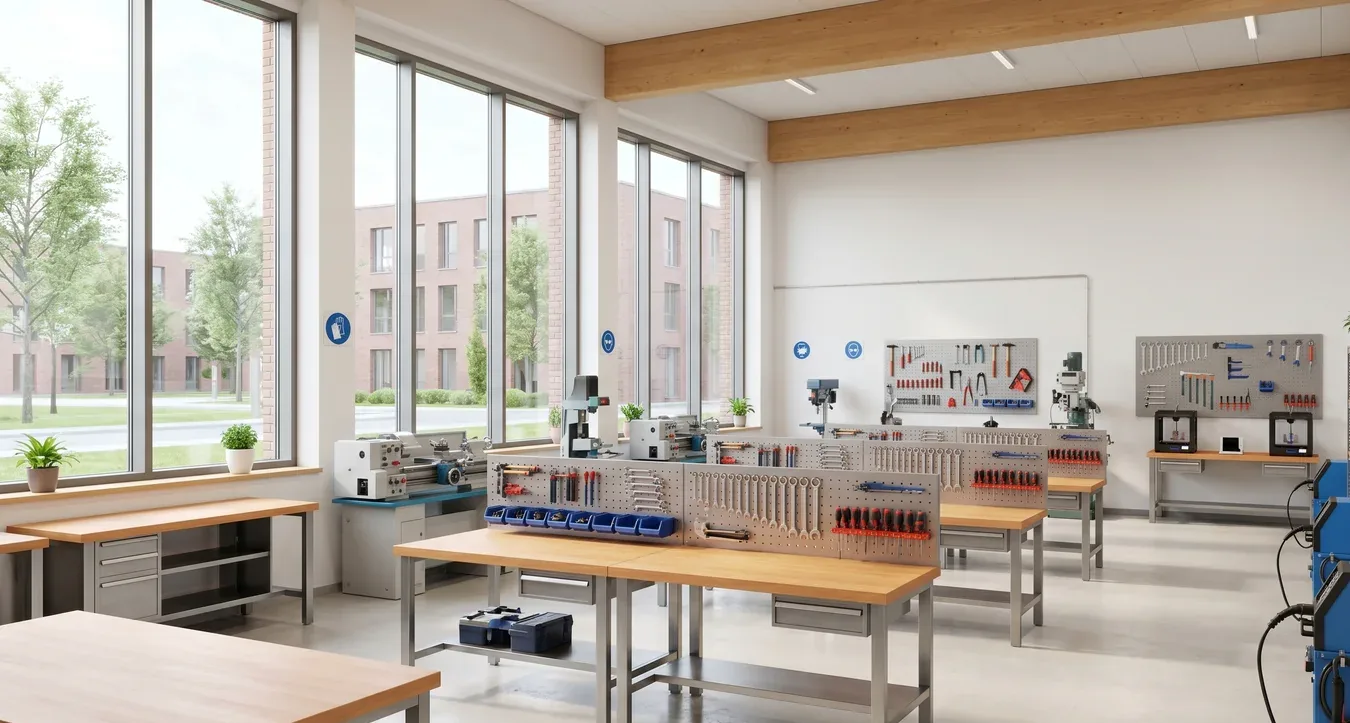
Ausbildung is Germany's dual vocational training system. "Dual" means your week is split between two places: a real company where you do the job, and a Berufsschule (vocational school) where you learn the theory behind it. You are a paid trainee the whole time, not a student paying fees.
Because you train inside a working company from day one, you finish job-ready, with experience an employer already trusts, not just a certificate.
How long the courses take
Most vocational Ausbildung courses run two to three and a half years, depending on the profession. Nursing and many skilled trades take three years. Some logistics and service roles are shorter. The exact length is fixed nationally for each profession, so it is the same wherever you train.
What you earn, and what it costs
- A monthly training stipend of roughly €900 to €1,300, which rises each year of the course.
- No tuition fees. The training itself is free, unlike a self-funded degree abroad.
- A starting salary of about €2,200 or more per month once you qualify.
- A route to long-term residency in Germany after you complete the course and start working.
The fields that hire international trainees
Not every course recruits from abroad, but several actively do. The most open fields are nursing and elderly care (Pflege), IT, hospitality and hotel work, mechatronics and electrical trades, and logistics. Nursing has the strongest and most consistent demand for international trainees.
Which Ausbildung field fits you?Entry requirements for a vocational Ausbildung course
The core requirements are a completed school education (broadly equivalent to German secondary school), a signed training contract with a company, and, for international applicants, the right visa or residence permit arranged with the German authorities. But the requirement that decides most applications is the language.
The one requirement that decides everything: German
Almost every vocational Ausbildung course needs B1 to B2 German (B2 for nursing), because the company, the classroom and the exams all run in German. This is the single biggest reason applications succeed or stall, and it is the part you can start on today, from anywhere, before you apply for a place.
Spraviva prepares your German online, from A1 up to the B1 to B2 level an Ausbildung course requires, with experienced teachers, and assists with placement in Germany through trusted partner channels. One clear path from beginner German to a training place.
How to start
- 1.Decide the field that fits your interests and the demand for internationals.
- 2.Begin German now and aim for B1 to B2, since it is the slowest part to build.
- 3.Prepare your documents and, with guidance, apply for a training place and the right permit.
Frequently asked
What is a vocational Ausbildung course in Germany?
It is Germany's dual vocational training: paid, structured training in a real profession, split between a company and a vocational school, that ends with a nationally recognised qualification. Training is tuition-free and you earn a monthly stipend throughout.
How long is an Ausbildung course?
Most run two to three and a half years. Nursing and many skilled trades take three years; some service and logistics roles are shorter. The length is set nationally for each profession.
Do you get paid during a vocational Ausbildung course?
Yes. Trainees earn roughly €900 to €1,300 per month, rising each year, and pay no tuition. Starting salaries after qualifying are commonly €2,200 or more per month.
What German level do you need for an Ausbildung course?
Usually B1 to B2, with B2 common for nursing, because the company, vocational school and exams are all in German. Spraviva prepares you from A1 to that level online.
Can foreigners do a vocational Ausbildung course in Germany?
Yes. Ausbildung courses are open to international applicants who reach the required German level, secure a training contract, and arrange the correct visa or residence permit with the German authorities.
Ready to take the next step?
The fastest way to start is a quick message — tell us your goal and we'll point you to the right course.
Message us on WhatsAppContinue reading
Ausbildung
Ausbildung by Trade: The Best Fields in Germany for International Students
Not sure which Ausbildung to choose? Here are Germany's most in-demand fields for international students — the prospects, the pay, and the German level each needs.

Ausbildung
Ausbildung in Germany for Pakistani Students: A Practical Guide
Train for a real profession in Germany, get paid while you learn, and build a future in Europe — tuition-free. Here's how Ausbildung works for Pakistani students.